Although the open innovation paradigm is not yet widely known in Lithuania, participants in the Business Open Innovation Summit presented successful examples of how this model accelerates product development, saves time, and strengthens the entire innovation network. For example, by applying the open innovation model in the healthcare sector, data-driven collaboration is already helping to create personalised medicine and treat rare diseases more effectively.
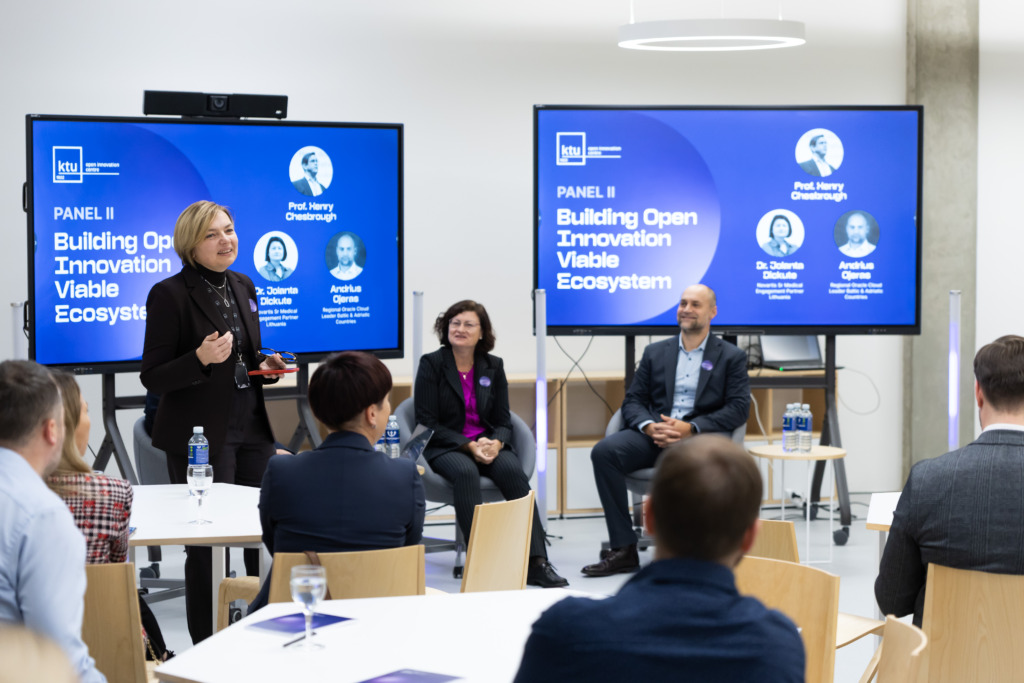
However, according to the event participants, although Lithuanian companies are becoming increasingly involved in international cooperation, cautious thinking still limits their ambitions. “Sometimes Lithuanians are too shy – as if the world ends in the Baltics,” said Andrius Ojeras, Oracle Cloud Regional Manager for the Baltic and Adriatic countries.
Open innovation ecosystem in Lithuania – from ideas to action
Representatives who participated in the event discussed the benefits of collaboration and the steps needed to build a thriving ecosystem in Lithuania. It was emphasised that open innovation is not limited to large corporations – smaller firms, universities, and public institutions can also gain from connecting expertise and resources.
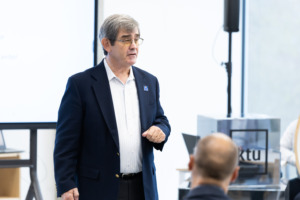
KTU takes a leading role in turning the vision of open innovation into reality. Professor Edita Gimžauskienė, a Vice-Rector for Strategic Partnerships, shared how the university is shifting from its traditional mission of knowledge creation to impact development. She spoke about KTU’s strategic direction to align research and education with national priorities such as smart specialisation, sustainability, and resilience, ensuring that innovation directly contributes to Lithuania’s growth.
The Open Innovation Centre will offer practical instruments for collaboration, such as the Open Innovation Paper Studio (OIPS), Open Innovation Research Impact Accelerator (OIRIA), and the Business Fellows in Residence (BFR) programme – all designed to strengthen the link between science and industry.
“The Open Innovation Centre will help us get closer and work together more effectively,” said Prof. Gimžauskienė. Looking ahead, KTU plans to expand its innovation network across Europe and to host the first Open Innovation Forum next year – a platform for sharing experience, experimenting with new ideas, and turning research into action. “Today’s universities must move from generating ideas to putting them into practice – acting as open, responsible, and innovation-driven ecosystems that transform ideas into real partnerships and tangible results,” she concluded.